
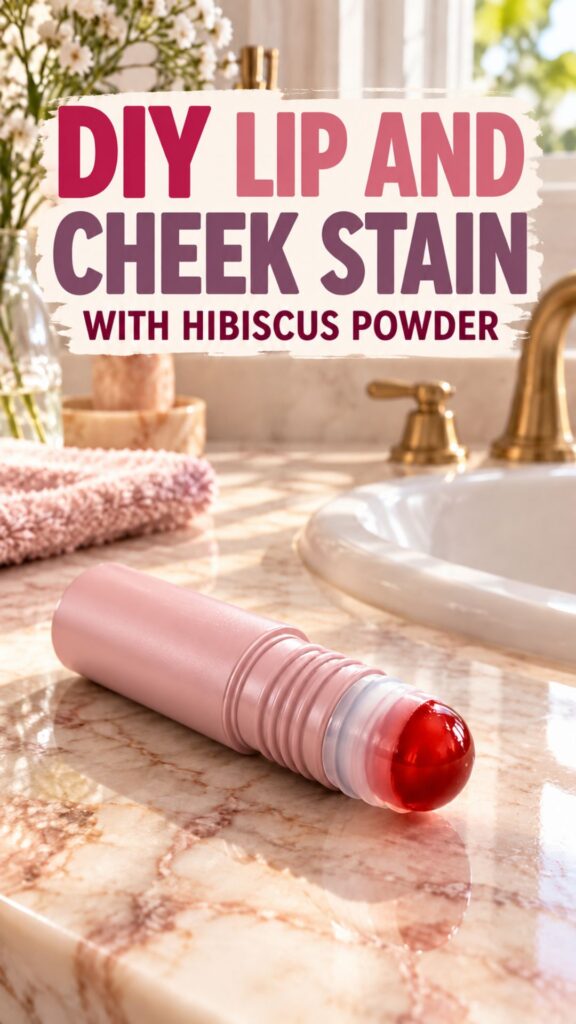
Want rosy cheeks without a full makeup routine? This DIY lip and cheek stain turns hibiscus powder and vegetable glycerin into a sheer tint you can tap on with your fingers. One light layer gives a soft flush; another adds a little holiday drama.
I love the simplicity of a matching lip-and-cheek look. This tutorial includes its equal parts powder and glycerin, an optional drop of jojoba oil, overnight rest, and muslin straining step.
One detail before we start: “actually lasts” is a tempting promise, but this recipe has no wear-test results. Think buildable color with touch-ups as needed, rather than guaranteed all-day, waterproof or transfer-proof makeup.
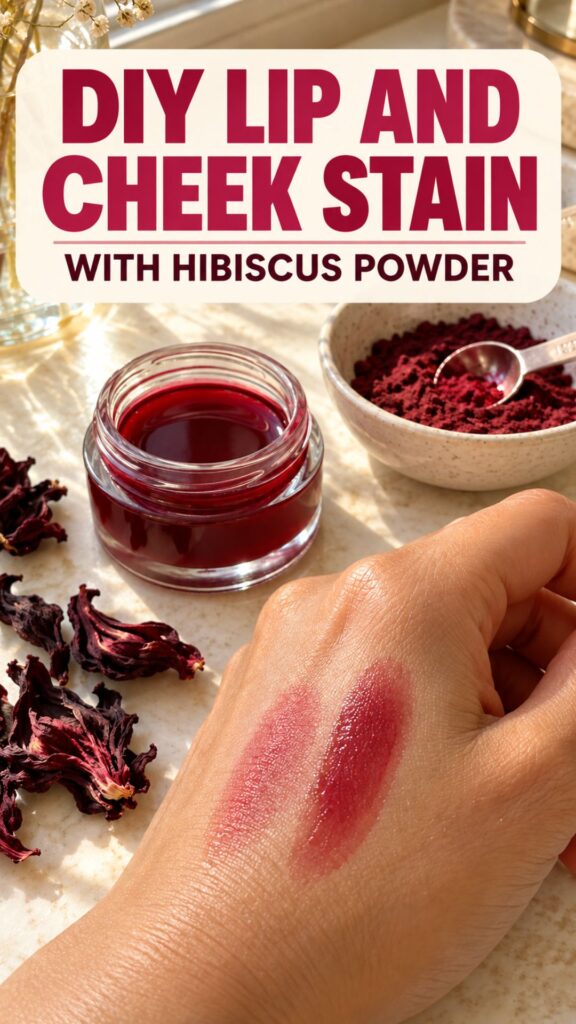
What to Expect From This Natural Homemade Blush Recipe
This is a glycerin-based liquid tint, not a firm balm or a conventional cream blush. It may feel tacky if you apply too much, so start with a tiny amount.
Hibiscus can produce a rosy-to-berry tint, while beetroot offers another pink-to-red option. Your powder, skin tone and application thickness will affect the finished shade. Swatch your own batch instead of relying on the color in the container.
Supplies and Ingredients
For one small trial batch, gather:
- ½ teaspoon finely ground hibiscus powder suitable for the intended cosmetic use.
- ½ teaspoon vegetable glycerin suitable for cosmetic use.
- 1 drop jojoba oil, optional, as shown in the tutorial for dry skin.
- A small mixing bowl and spoon or cosmetic spatula.
- A ½-teaspoon measuring spoon.
- Clean, dry, fine-weave muslin cloth.
- A second small bowl for straining.
- A clean, dry cosmetic pot with a lid.
- A clean applicator or spatula for removing each portion.

Check the supplier’s documentation for use on cheeks and, if you plan to apply it there, lips. “Food-grade,” “organic” or “natural” alone does not establish suitability for a lip cosmetic.
A screw-top pot suits this liquid recipe better than an empty twist-up lip balm tube. There is no wax here to make a solid stick. The amount recovered will be less than the starting mixture because the cloth and powder retain some liquid.

Hibiscus Powder Cheek Stain Tutorial: 5 Simple Steps
1. Prepare your tools. Wash your hands and clean your bowls, spoon and container. Let everything dry fully before mixing. Keep the work area clean, too.
2. Combine the powder and glycerin. Add ½ teaspoon hibiscus powder and ½ teaspoon vegetable glycerin to the bowl. Stir thoroughly, pressing apart visible clumps. Do not add water to thin it.
3. Add the optional jojoba oil. Stir in one drop if you want to follow the tutorial’s dry-skin variation. If you are exploring jojoba oil for DIY makeup, start with that single drop rather than a generous pour. This recipe has no emulsifier, so the oil may separate; it does not preserve the mixture.
4. Cover and let it rest overnight. This is the resting step that you shouldn’t skip. Cover the mixture to protect it from dust. Resting may help develop the tint, but it does not sanitize the ingredients or establish safe storage.
5. Strain into your container. Position clean, dry muslin over the second bowl, spoon in the mixture and gently gather and squeeze the cloth. Transfer the collected tint to the cosmetic pot. Discard the remaining solids. If the liquid still feels gritty, strain again rather than rubbing particles onto your skin.
Do not expect the powder to disappear completely while mixing. The straining step separates the collected tint from leftover plant material.
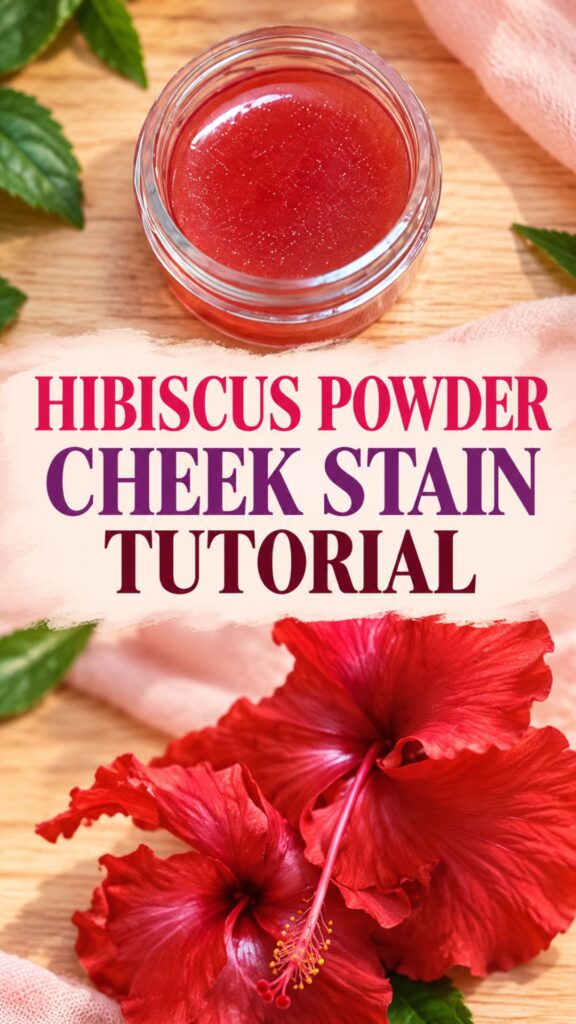
How to Apply Cream Blush With Fingers—Using This Liquid Tint
If you already know how to apply cream blush with fingers, use the same gentle tapping motion here. The difference is the texture: this stain is liquid and needs a very small starting amount.
1. Begin with clean skin or your usual base, allowing skincare to settle first.
2. Use a clean spatula to place a tiny portion on the back of your freshly washed hand.
3. Pick up a trace with a clean fingertip and tap it onto one cheekbone.
4. Stipple outward immediately, softening the edges without scrubbing.
5. Repeat on the other cheek and let the first layer settle before adding more.
For a no-makeup makeup natural blush look, stop at a sheer flush. For more visible color, add a second thin layer only where you want extra depth.
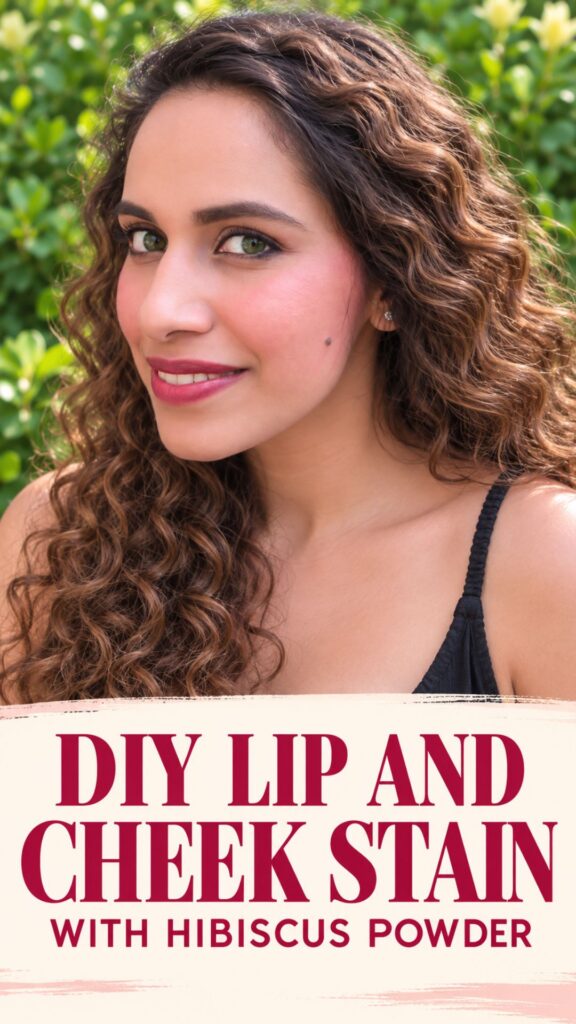
Make It a Buildable Natural Lip Stain
Use the lip version only when every ingredient is documented as suitable for lip use. Avoid irritated, cracked or broken skin, and stop if the product causes burning, itching or redness.
Take a separate clean portion and tap a tiny amount onto your lips. Spread it evenly, let it settle, then add another thin layer if you want a deeper shade. Avoid dipping a used finger back into the container.
This vegetable glycerin lip stain may leave some surface tackiness. Keep layers light, expect possible transfer and check the color after eating or drinking.
How to Make Beetroot Powder Lip Stain
You can also use beetroot powder as an alternative. To try it, replace the ½ teaspoon hibiscus powder with ½ teaspoon beetroot powder suitable for the intended cheek and lip use.
Keep the glycerin at ½ teaspoon and the optional jojoba oil at one drop. Follow the same mixing, overnight resting and straining steps. Make the versions separately so you can compare their shades before experimenting with blends.
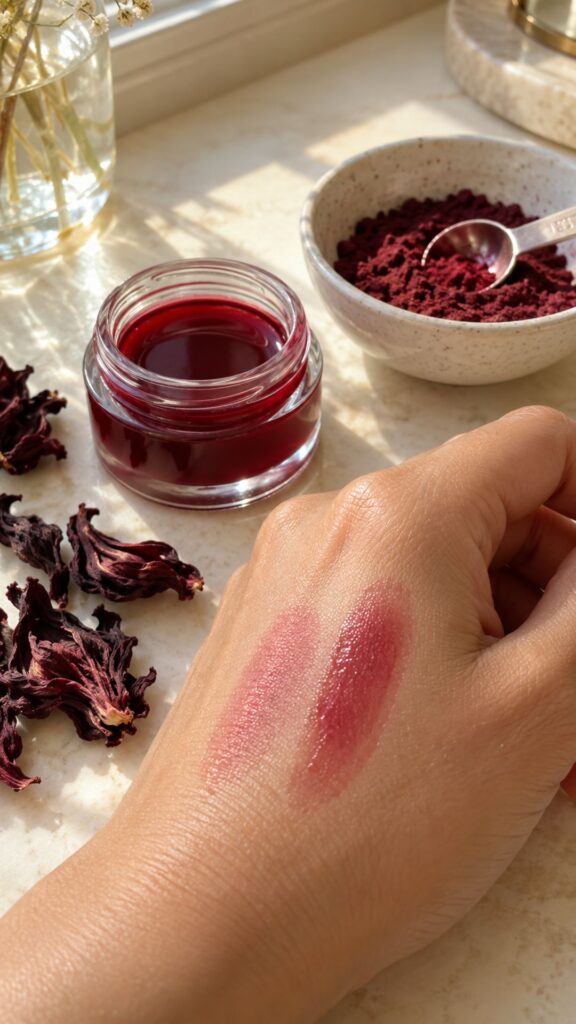
Tips for Better Wear and Easy DIY Makeup for the Holidays
For easy DIY makeup for the holidays, pair a slightly deeper cheek tint with matching lips and a simple eye look. The color is the focus, so you can keep the rest of your routine quick.
To give your application its best chance:
- Apply over a settled base rather than a fresh, slippery layer of oil or balm.
- Build with thin layers instead of one thick coat.
- Let each layer settle before adding the next.
- Avoid touching or rubbing your cheeks after application.
- Expect lip touch-ups after meals or drinks.
These are application suggestions, not proof of a particular wear time. I would test the look at home before relying on it for a holiday party.
Skin Testing and Storage
Natural ingredients can still irritate skin. The American Academy of Dermatology recommends testing new skincare products on a small area before regular use. Its general home-testing guidance is twice daily for seven to 10 days; that guidance does not establish this homemade mixture’s shelf life. Do not keep one unpreserved batch for that period simply to complete a test.
This recipe has no validated preservative system or microbial testing, so I cannot give it a safe shelf life. FDA notes that contaminated ingredients, inadequate preservation and fingers dipped into cosmetics can introduce or support harmful microorganisms.
Treat this as a small personal experiment rather than a jar to store for weeks: make the smallest practical batch, use a clean portion for the application session and discard leftovers afterward. That precaution does not certify the recipe as safe. Do not add water, share the pot, or use it near your eyes. Refrigeration and a normal smell are not proof of safety.
For a tint you want to keep in your makeup bag and use repeatedly, choose a properly preserved, tested cosmetic instead.
Watch the DIY Lip and Cheek Stain Tutorial
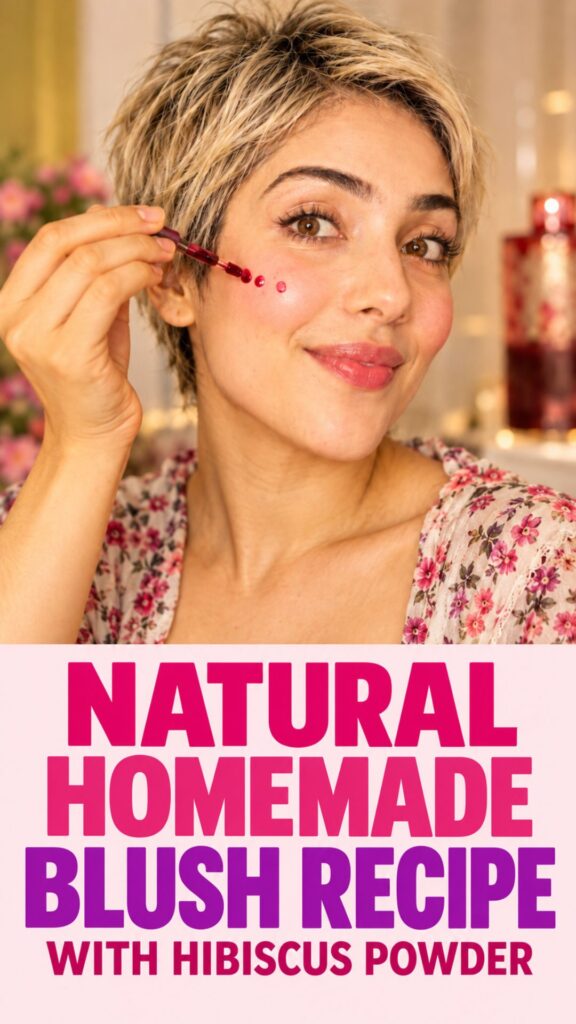
Check out the video to see the steps in action. Use finger application, a second layer for stronger color and warming a portion on the back of the hand before tapping it onto the cheeks.
Would you try a soft hibiscus flush or compare it with beetroot first? Start light, build slowly and let your own swatch guide the look.